ACRI Services and Consulting led a full SCADA upgrade project for an Atlanta-based energy holding company, one of the largest utilities in the United States, serving approximately 9 million natural gas and electric customers across six states and operating more than 43,000 megawatts of generation capacity. The company manages assets across the entire energy value chain—generation, transmission, and natural gas distribution—and depends on SCADA as a mission-critical system for safe, reliable operations.
Challenge
The utility’s gas SCADA platform was more than 15 years old and had undergone years of incremental upgrades, patches, and workarounds. As a result, the system had become difficult to support, with some components approaching obsolescence. A prolonged SCADA outage or failure could lead to operational downtime, lost revenue, customer outages, and potential noncompliance with regulatory expectations for pipeline and gas distribution safety.
Objectives
The client engaged ACRI to move beyond ad hoc solutions and evaluate a complete SCADA replacement with a modern, vendor-supported solution. Key objectives included:
- Maintain reliability and uptime of gas SCADA operations
- Standardize and modernize Real-Time SCADA, EFM/Measurement, and asset management capabilities
- Ensure scalability for future growth and regulatory changes
- Reduce operational risk associated with obsolete systems and unsupported components
ACRI Approach
ACRI structured the engagement around a disciplined, vendor-neutral selection process designed to be transparent and aligned with the client’s operational reality.
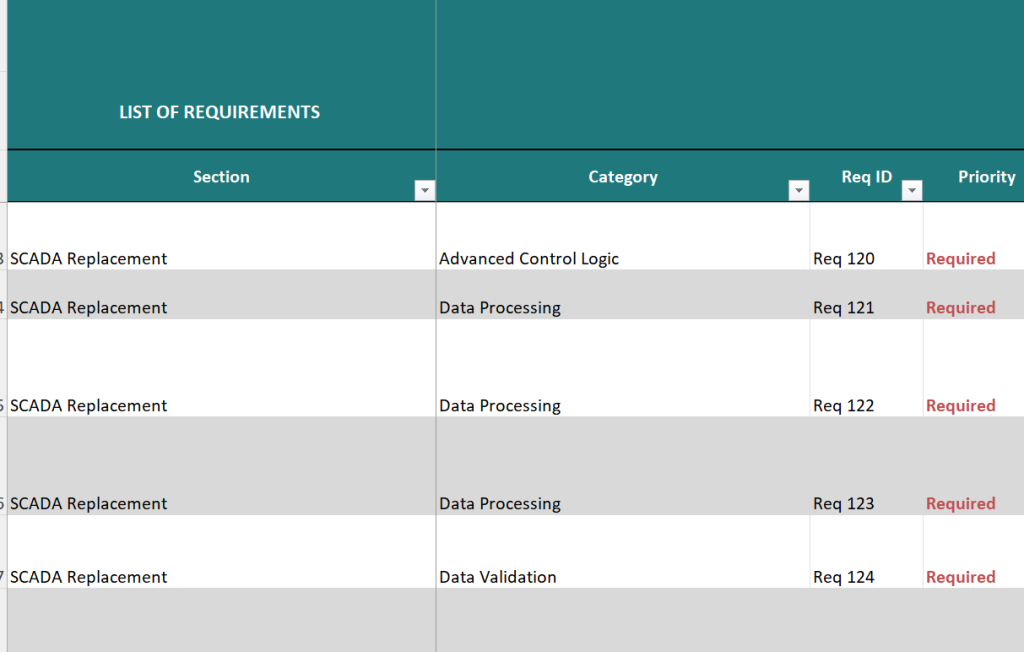
- Defined detailed functional and technical requirements for Real-Time SCADA, EFM/Measurement, and Asset Management, creating a baseline of the current architecture and target capabilities
- Conducted broad market research across the natural gas SCADA software space, starting with an initial field of ten qualified vendors
- Developed a multi-criteria Vendor Scorecard that evaluated each candidate against the requirements, including functionality, cyber security posture, integration capability, support model, and total cost of ownership
- Shortlisted six vendors for deeper evaluation based on scorecard results
- Coordinated on-site “show and tell” demonstrations at each vendor’s facility to review system capabilities, architecture, and roadmap and to address detailed technical and administrative questions
- Arranged on-site customer-site demos to observe the shortlisted systems in real-world, day-to-day operations and gather feedback from end users in the field
Outcome
By combining requirements-driven analysis with practical field validation, ACRI delivered a selection process that was fair, transparent, and fully documented. The chosen SCADA platform aligned with the client’s needs for accuracy, scalability, and operational safety while also improving usability for control room and field personnel. The utility now has modern, supportable SCADA applications that reduces operational risk, supports regulatory expectations, and positions the organization for future expansion and technology upgrades.